
DOSBox Staging vs DOSBox-X vs Vanilla DOSBox: Which to Use
Three projects carry the DOSBox name and each states a different goal. A comparison drawn from their own manual, About page and README, ending with a rule for choosing.
DOS Attic is an independent site about PC games from the DOS era, roughly 1981 to 1996: the studios and decisions behind them, the graphics and sound hardware they were written for, and how to play them legally today through GOG and Steam re-releases or official freeware.
It is researched and written by Sung Hwan Cho, a Seoul-born industrial designer.
Browse: Games · History & Hardware · Guides · About
Three projects carry the DOSBox name and each states a different goal. A comparison drawn from their own manual, About page and README, ending with a rule for choosing.
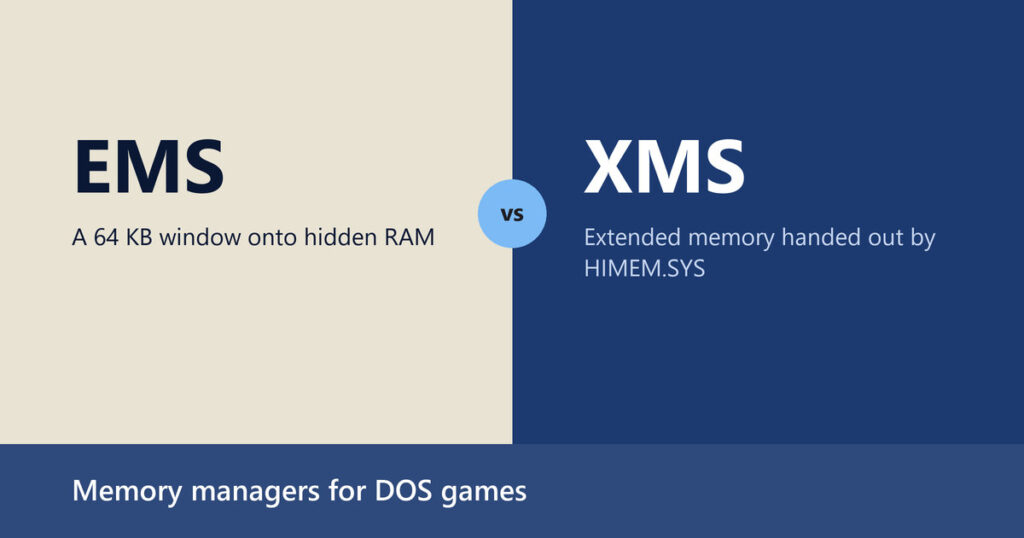
The 640 KB wall, the EMS page frame, XMS and the high memory area, the CONFIG.SYS load order and the RAM versus NOEMS trade, read from Microsoft’s documentation, plus what DOSBox’s ems and xms options do.
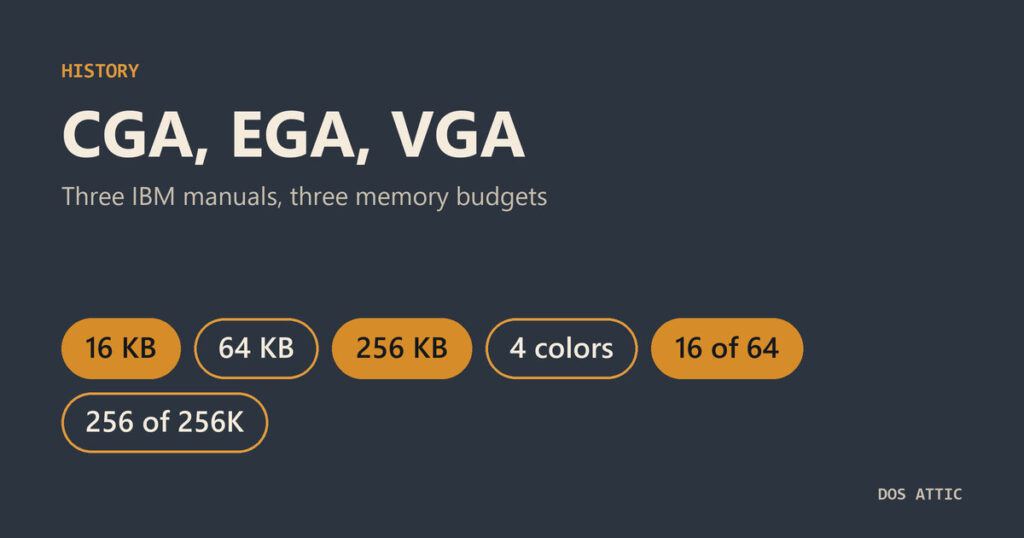
IBM’s own technical references show how CGA, EGA and VGA differed in memory and color, and where common tables mix up colors on screen with palette size.
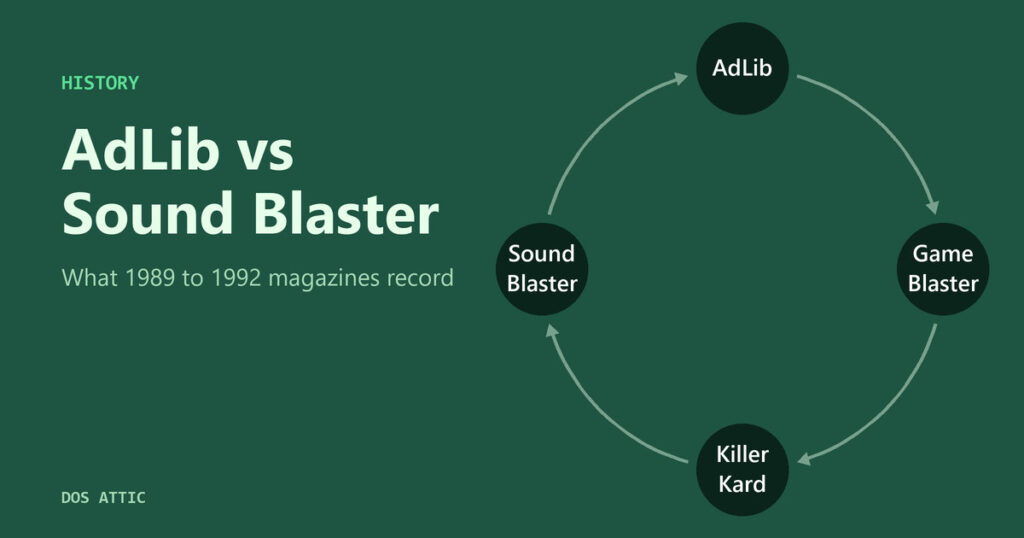
Computer Gaming World’s September 1989 lab report crowned the AdLib, then announced a Creative card due in October. Prices, ads and support lists show how the Sound Blaster took over.
Oil, ships and dragons gave Warcraft II its edge; Computer Gaming World’s 1996 reader polls put it half a point ahead of Command & Conquer, which took the editors’ award.
Clouds of Xeen was designed as one half of a world. What the 1992 and 1993 magazines reported about the merge, the interface and the journal, and where the combined edition sells.
How an IBM request for a PCjr showpiece became King’s Quest: rooms stored as drawing instructions, the four-object limit, Roberta Williams on story and parser, and the editions in order.

Who made Eye of the Beholder? CGW’s 1991 credit box, two reviewers, the DOS ending, and the trilogy now sold on Steam and GOG.

X-Wing turns each Rebel starfighter into a battery split between engines, lasers and shields. A look at the 1993 game through its credits, a June 1993 review and what Steam and GOG sell now.

Scott Miller’s Kroz checks, a 1992 Wolfenstein 3-D order policy, a fake-fan-mail recruitment and the 1987-2021 name changes, traced from interviews and period magazines.
How Dave Gibbons’ pencil backgrounds became a 320 by 200 DOS adventure, how Virtual Theatre let the city live, and which 1994 editions are freeware today.
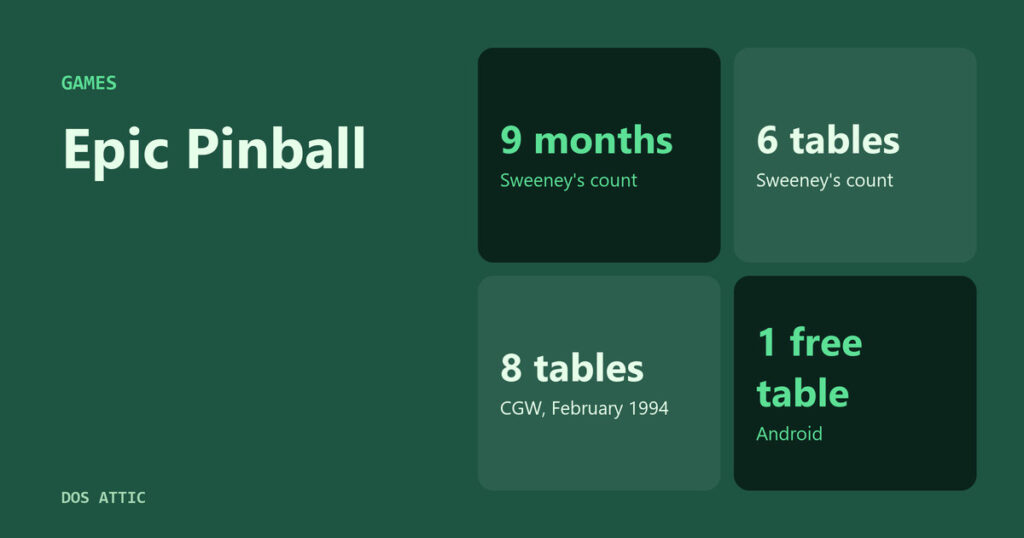
Tim Sweeney recalls Epic Pinball as a nine-month build that earned over a million dollars in royalties. Here is how his account checks against 1994 magazines and the studio.